
Chair of Plant Systems Biology
By combining molecular, genetic, biochemical, and cell biological approaches with functional genomics, proteomics, and structural biology, the Chair of Plant Systems Biology investigates fundamental processes underlying plant growth and development. Our central aim is to uncover the key regulatory mechanisms by which plants control their development and adapt to changing environmental conditions. Our research ranges from the analysis of individual signaling pathways and transport processes to the systems-level investigation of complex cellular and developmental networks.
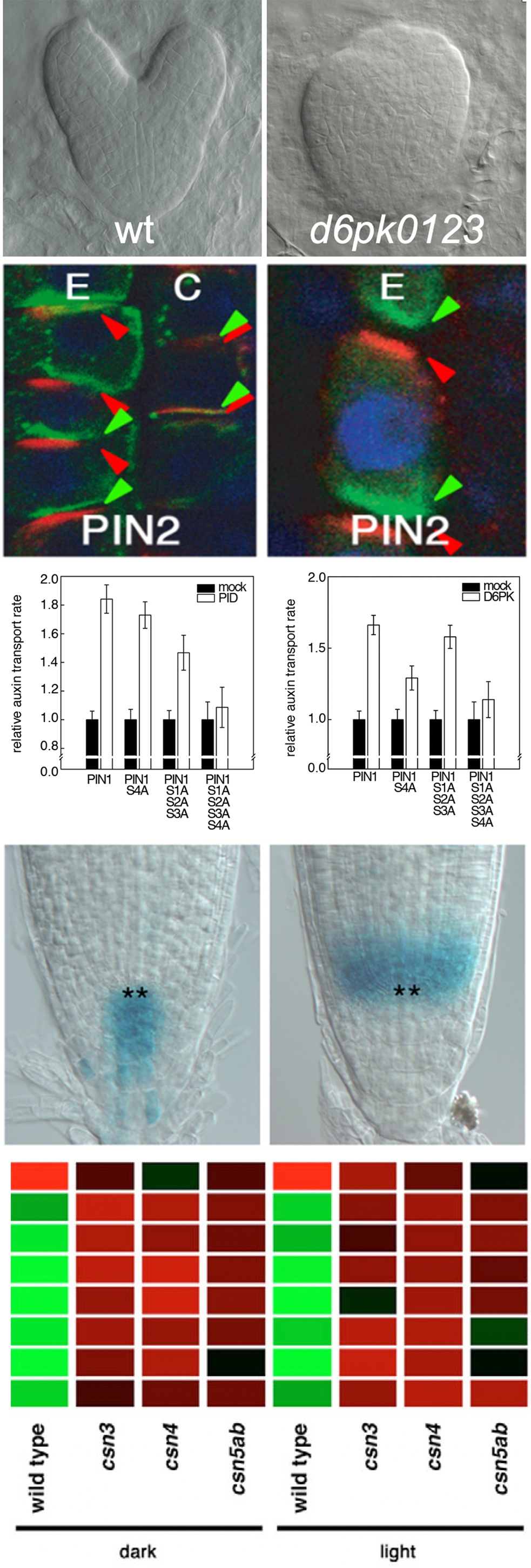
The research group of Prof. Dr. Claus Schwechheimer shapes the scientific profile of the Chair through its work on the molecular regulation of plant developmental processes. A central focus is to understand how phytohormones such as auxin and gibberellin control growth, differentiation, and developmental plasticity, and how these signals are integrated into complex regulatory networks. In particular, the group investigates the regulation of auxin transport by protein kinases, the control of key signaling pathways through targeted protein degradation, and the regulation of gene expression in the gibberellin signaling pathway. Through this work, the group strengthens the systems biology perspective of the Chair on the interplay between hormonal signal perception, regulatory networks, and the control of plant development.
Since 2026, the Chair has been expanded by two new research groups that strategically complement and broaden its scientific profile.
The research group of Dr. Mariana Moreno Motta investigates how mechanical signals in plants coordinate cell division, growth, and differentiation, thereby controlling organ formation. A central question is how mechanical tension is translated into biochemical signals, with microtubules serving as a key interface between mechanical forces, kinase signaling pathways, and morphogenesis. Using Arabidopsis thaliana, live-cell imaging, genetic approaches, and biophysical methods, the group studies the mechanochemical regulation of plant growth. Previous work has shown that cell cycle regulators control microtubule organization during cell division and that MAP65-1 specifically recognizes and stabilizes mechanically strained microtubules. Future work aims to clarify how mechanical tension influences the cell cycle and which signaling pathways enable robust morphogenesis at the cellular and tissue levels.
The research group of Dr. Francesca Bellinazzo investigates de novo domestication within the Asteraceae family in order to develop new crop species from wild or only partially domesticated plants. The focus is on the targeted introduction of known domestication traits using modern genome editing technologies to create robust, diverse, and innovative crops with improved adaptability. A central model system is lettuce (Lactuca sativa), whose molecular domestication traits provide a foundation for the exploration of additional members of the Asteraceae. The group identifies domestication genes in lettuce, investigates their modes of action, and selects suitable wild Asteraceae populations for potential domestication. To achieve this, the group combines gene expression analyses, genetic approaches, plant transformation, CRISPR-Cas genome editing, and both low- and high-throughput phenotyping strategies.
From 2023 to 2026, the Chair hosts Hans Fischer Senior Fellow Prof. Dr. Bjørn Panyella Pedersen, a Danish structural biologist from Aarhus University. His research combines structural biology with biophysical methods and focuses on similarities and differences in molecular transport mechanisms in plants and other eukaryotes. In this way, he complements the Chair’s cell biological and molecular research with a high-resolution structural perspective on membrane transporters and their mechanisms of action.
The research groups of Prof. Dr. Ulrich Z. Hammes and Dr. Philipp Denninger left the Chair in October 2025 and April 2026, respectively, and continued their research at the University of Würzburg.
Overall, the Chair brings together complementary expertise in signal transduction, mechanical signaling, developmental biology, domestication research, and structural biology to uncover fundamental mechanisms of plant development. The close integration of basic research in model organisms with the study of relevant crop species provides the basis not only for a mechanistic understanding of plant biology, but also for the long-term translation of new discoveries into forward-looking applications in plant science.
Further information about our research and research groups can be found on the following pages.
If you are interested in carrying out internships or bachelor's, master's or doctoral theses or postdoctoral projects at our chair, please contact:
Prof. Dr. Claus Schwechheimer
Chair of Plant Systems Biology
Technical University of Munich
School of Life Sciences
Emil-Ramann-Strasse 8
D-85354 Freising
Phone: +49 8161 71 2880
Email: claus.schwechheimer@tum.de
Consultation hours: Monday 9 a.m. – 11 a.m. or by appointment