
Forschungsausrichtung
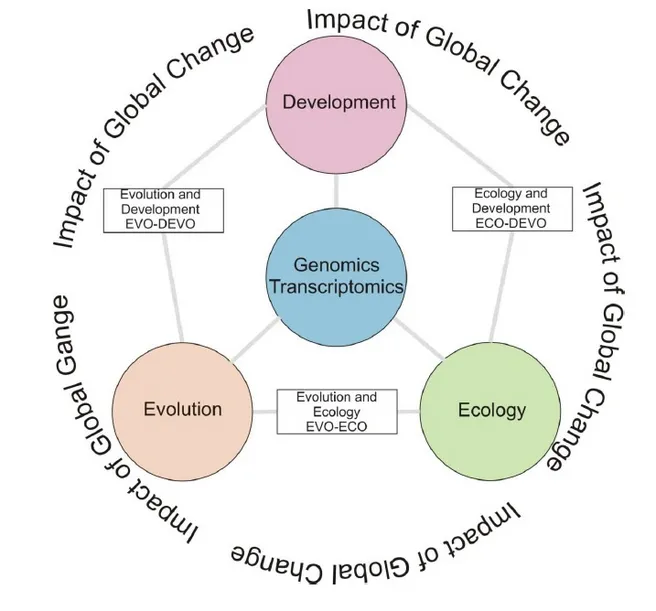
Die Forschungsausrichtung im Bereich Molekulare Zoologie verbindet in einem Forschungsprogram Ökologie, Evolutionsbiologie, Physiologie und Genetik um eine Basis zum Verständnis der komplexen Interaktionen zwischen Gen und Genexpression mit der Umwelt auf der Ebene von Organismen und Lebensgemeinschaften in aquatischen und terrestrischen Ökosystemen zu liefern. Aus den hieraus erlangten Ergebnissen lassen sich die Kausalitäten der Entstehung, der Regulation und des Erhalts biologischer Vielfalt erarbeiten. Die "Extended Evolutionary Synthesis", die Integration von Ökologie, Evolution und Entwicklungsbiologie (ECO-EVO-DEVO) unter dem Aspect des "Global Change" ist das zugrundeliegende Konzept.
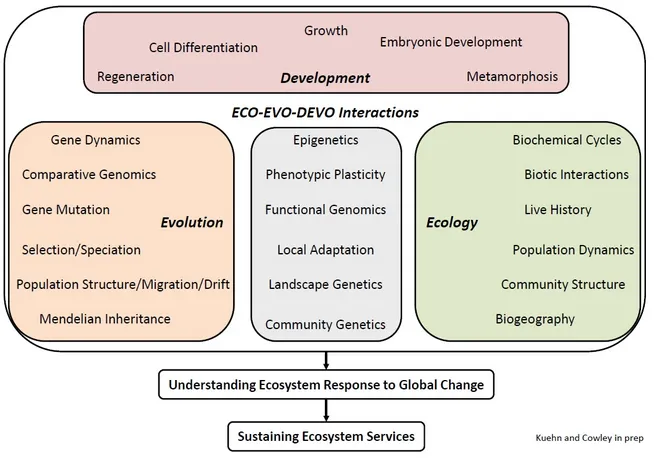
Das Verständnis der Genom-Umwelt-Interaktionen als Schnittstelle zwischen Ökologie und Evolutionsbiologie mit seinen Kernthemen phenotypic plasticity, landscape genetics, epigenetics, local adaptation, functional genomics und community genetics wird einen Einblick geben, wie Ökosysteme auf globale Veränderungen reagieren und dient einer nachhaltigen Nutzung der Biodiversität sowie der durch sie gelieferten Ökosystemdienstleistungen. Mikroskalierte genetische und physiologische Daten werden mit makroskalierten Daten aus Studien zur Ökologie und Evolutionsbiologie verknüpft. Umfassende Analysen zur Genomik, Transkriptomik und Proteomik natürlicher Tiergemeinschaften werden durchgeführt, um die funktionalen Interaktionen auf unterer Ebene der biologischen Integration und deren ökologische und evolutive Signifikanz auf höherer Ebene zu erforschen. Dies wird erreicht durch den Transfer innovativer analytischer Technologien (next generation genomic and transcriptomic technologies) von Modeltierarten auf natürliche Experimente (nicht-Modeltierarten).