ImmunoSafe-CeD - Towards comprehensive analytical methods for partially hydrolysed gluten to assess product safety for celiac disease patients
| Abbreviation: | ImmunoSafe-CeD |
| Project Group: | Eleonora Tissen |
| Funding: | EU H2020, ERA-HDHL, BMBF, 01EA2205A |
| Start date: | 01. April 2022 |
| End date: | 31. December 2025 |
| Grant recipient: | Karlsruher Institute for Technology (KIT) (until 08/2024), Leibniz-LSB@TUM (from 09/2024) |
Celiac disease (CeD) is a common food-induced inflammatory disease of the small intestine caused by the ingestion of gluten from wheat, barley and rye. It is one of the most prevalent food hypersensitivities worldwide and affects 0.5-2.5% of the European population. The only effective treatment available is a strict lifelong gluten-free (GF) diet. GF products for CeD patients must not exceed the regulatory threshold of 20 mg/kg of gluten. Compliance of foods containing fermented or partially hydrolysed gluten is routinely assessed using the R5 competitive enzyme-linked immunosorbent assay (ELISA). However, this test does not adequately represent gluten immunogenicity in CeD patients.
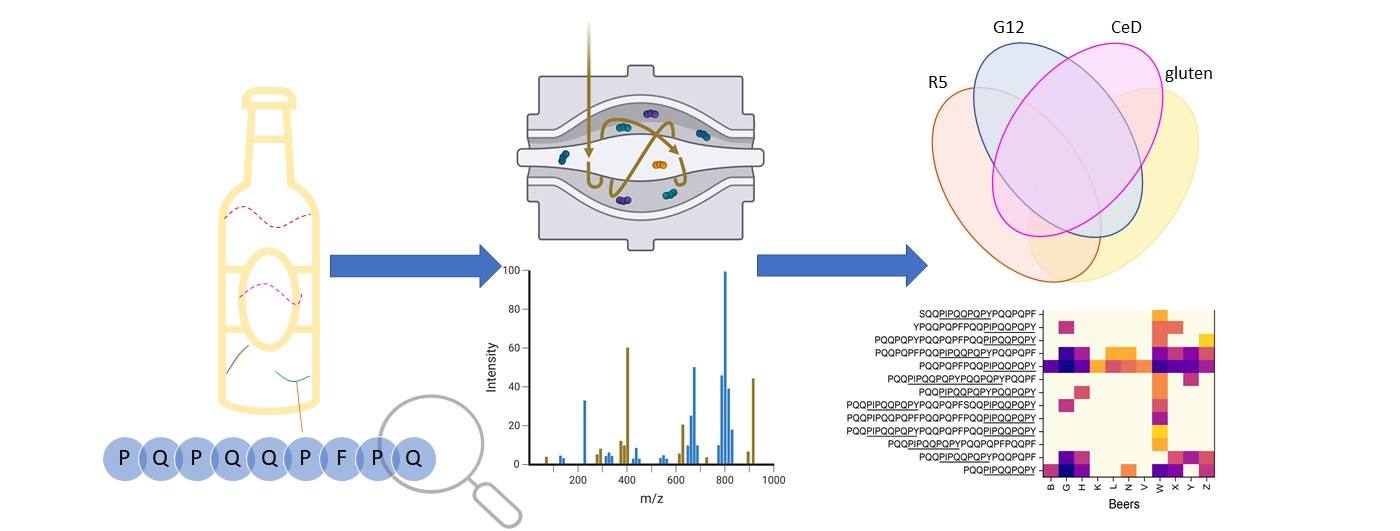
The overall objective of our ImmunoSafe-CeD proposal is to determine the CeD immunogenic activity of intact and partially hydrolysed gluten from wheat, rye and barley and develop improved comprehensive functional and analytical assays, including novel ELISAs and quantitative proteomics methods to ensure food safety for CeD patients. Thus, our objective is designed to directly address the needs of the CeD community about being reassured that GF products that contain partially hydrolysed gluten are safe and suitable for inclusion in their GF diet.
By combining discovery proteomics and quantitative LC-MS/MS methods, improved reference materials for partially hydrolysed gluten, CeD-patient derived monoclonal antibodies and functional gluten-specific T-cell assays, we will provide a comprehensive and unique toolbox of novel and validated methods to detect gluten (both intact and partially hydrolysed) in foods for CeD patients. This toolbox will close the current discrepancy between food analytical methods and CeD immunogenicity for the first time, because all methods will be matched to clinical pathophysiology assessed by food challenge in CeD patients.